Shabesh Na (TAU final project)
A Playful Perspective on Disrupted SpaceIn various incidents and moments around the city, the social order is broken by a disruption, and a new temporary order emerges. After the disruption is removed, life goes back to order, but an opportunity was revealed, and space is seen with new eyes. I called these incidents “Little moments of freedom”.
The project studies these moments and proposes to implement their values in a real-life temporary disruption situation: the construction of the underground train in Tel Aviv, which started 3 days after the final presentation.
The project studies these moments and proposes to implement their values in a real-life temporary disruption situation: the construction of the underground train in Tel Aviv, which started 3 days after the final presentation.
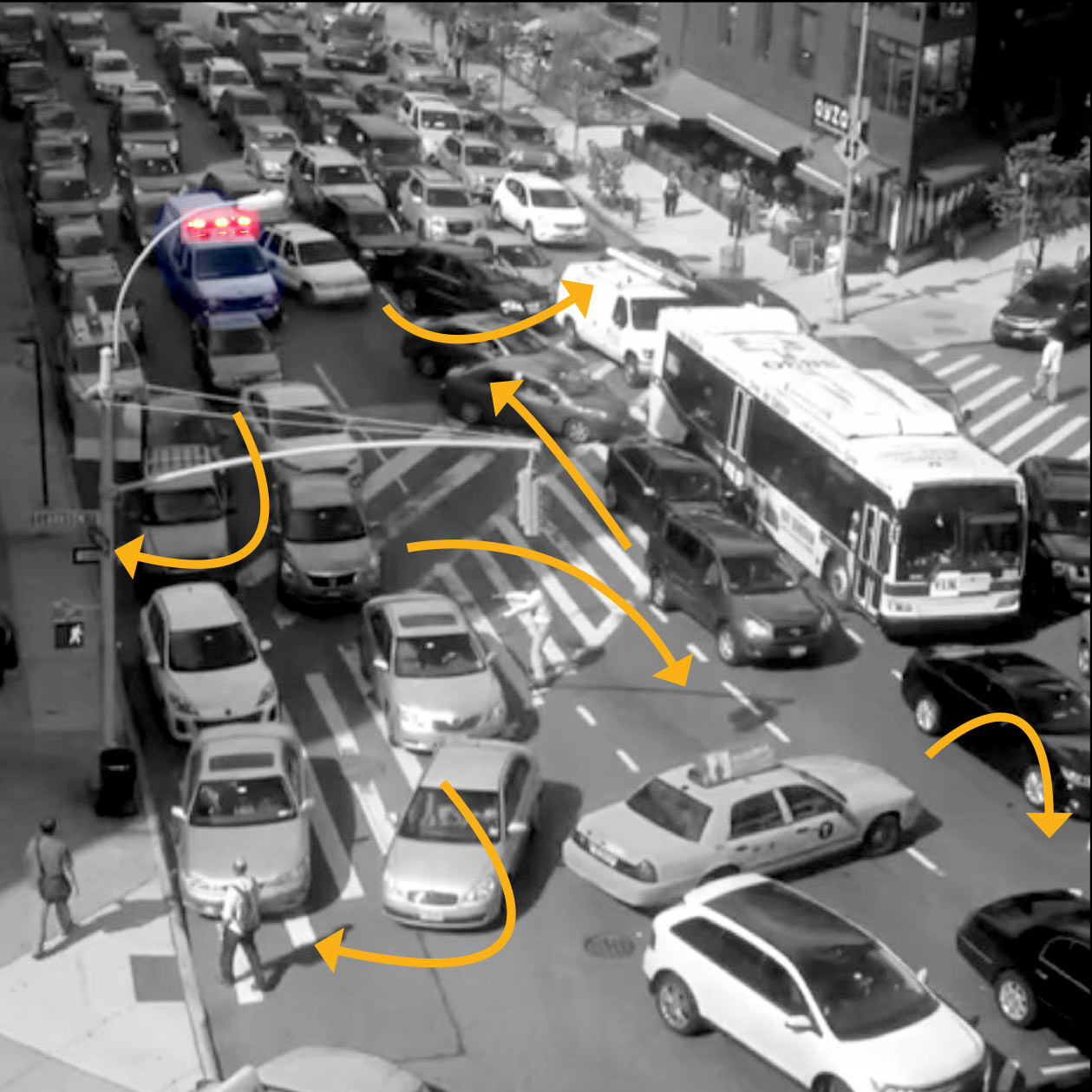
With old order now disrupted, freedom of choice is given to users. It is then when space starts to shed its signs.

Disruptions activate us physically. They have the potential to expose our wilder side.
 They offer an interpretive look and unintentionally break borders between private and public.

They can break social and spatial hierarchy. Events, demonstration,s and parties have the potential for a new temporary order to emerge.
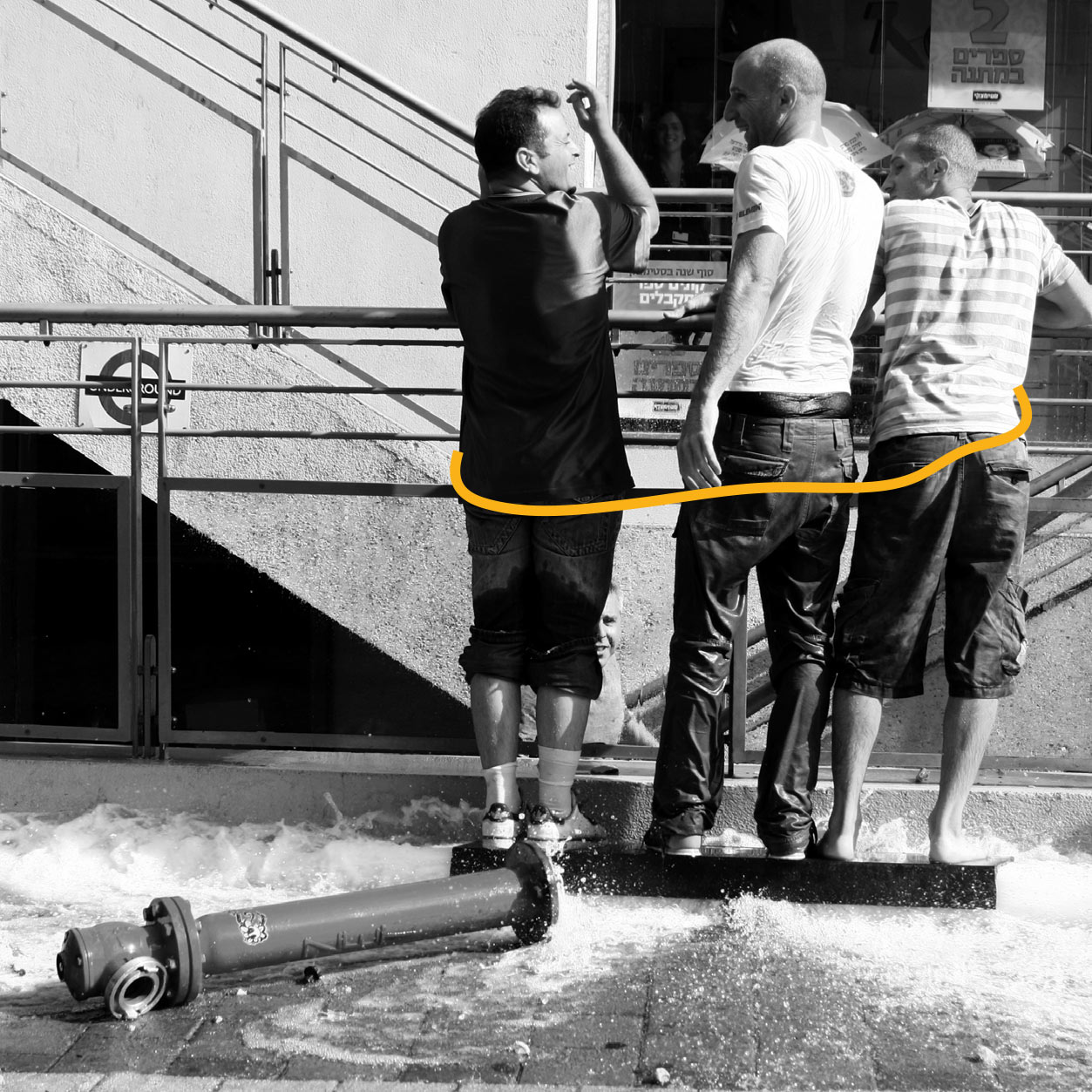
They make us think creatively, searching for solutions. And they make us communicate and cooperate with strangers.

This playful interpretive look is what children have and slowly lose as they grow up and begin to construct their perception of their surroundings.


Analyzing the spatial qualities of construction sites revealed spaces full of freedom and opportunities.
Breaking the semiotic code of space makes it abstract, alien, and thus open for interpretation.
Children are also very well known for having an interpretive and creative perspective of space. In their unstructured gaze, they explore the space around them through play and physical engagement.
Breaking the semiotic code of space makes it abstract, alien, and thus open for interpretation.
Children are also very well known for having an interpretive and creative perspective of space. In their unstructured gaze, they explore the space around them through play and physical engagement.
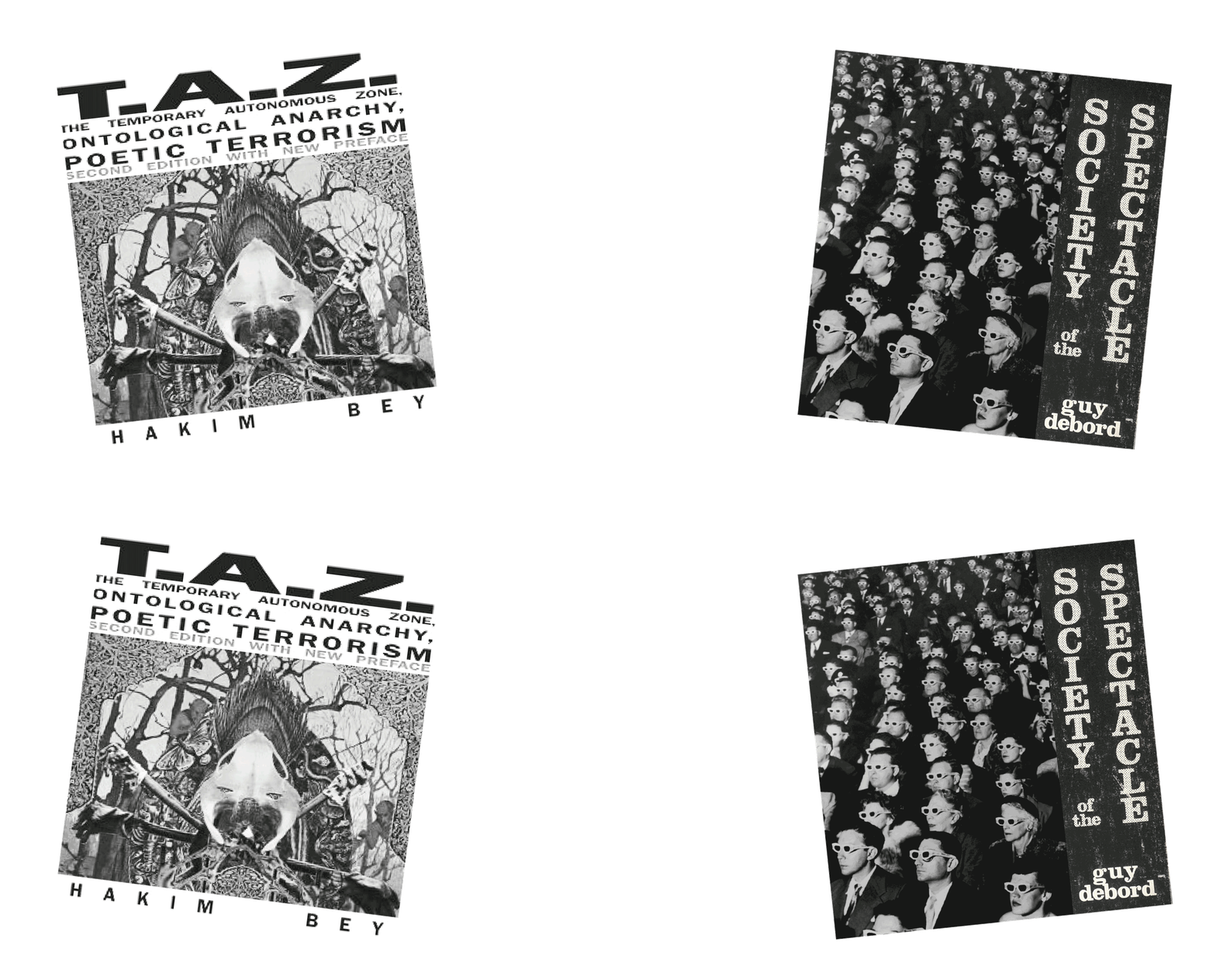
Hakim Bey’s “Temporary Autonomous Zone” speaks about temporary utopias as anarchistic tactics. I extracted a few main principles from his theory:
* Every revolution will end in a new social order. Real freedom lies in the moment of insurrection.
* Transience is a necessary condition for freedom.
* Every revolution will end in a new social order. Real freedom lies in the moment of insurrection.
* Transience is a necessary condition for freedom.
Guy Debord, considered part of the Situationist movement, in his book “Society of the Spectacle”, speaks about how society became a spectator. Passive and consuming the world around us.
He offers different playful tactics as a way to engage with our environment and challenge the common capitalist agenda.
He offers different playful tactics as a way to engage with our environment and challenge the common capitalist agenda.

In August 2015, construction work started for the first-ever light rail train in the Tel Aviv Metropolitan area. Most stations within Tel Aviv city are in fact underground, which resulted in many large-scale construction sites located in key locations. The news on this future plan created public hysteria and described this period as a sort of armageddon.
This project’s objective was to suggest a different approach to this period. Considering the values and benefits of temporarily disrupted space, its proposal was to celebrate freedom, given by chaos, and make the hazard into a festival.
This project’s objective was to suggest a different approach to this period. Considering the values and benefits of temporarily disrupted space, its proposal was to celebrate freedom, given by chaos, and make the hazard into a festival.
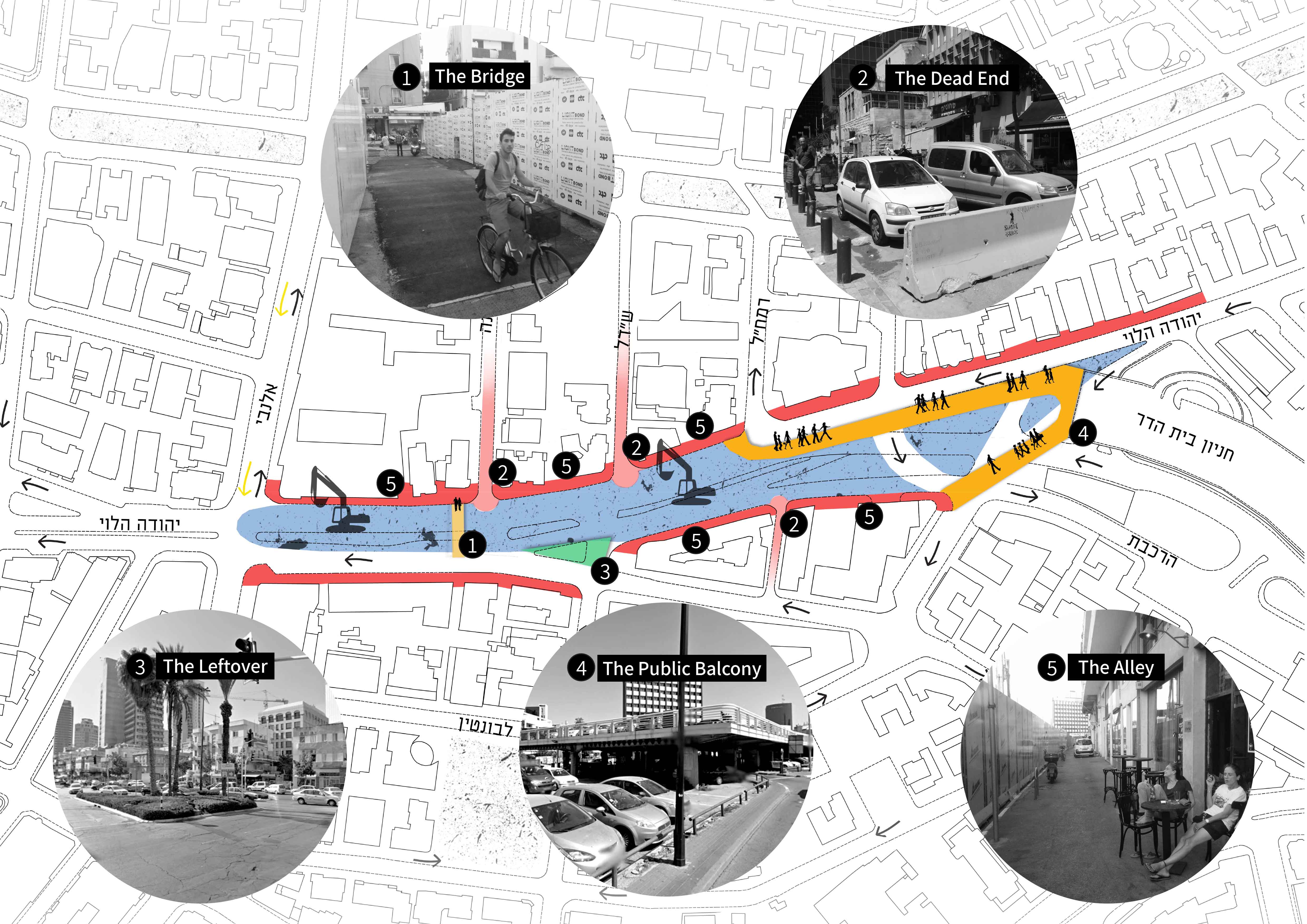 Chosen construction site with new typological situations
Underground stations to be built in Tel Aviv
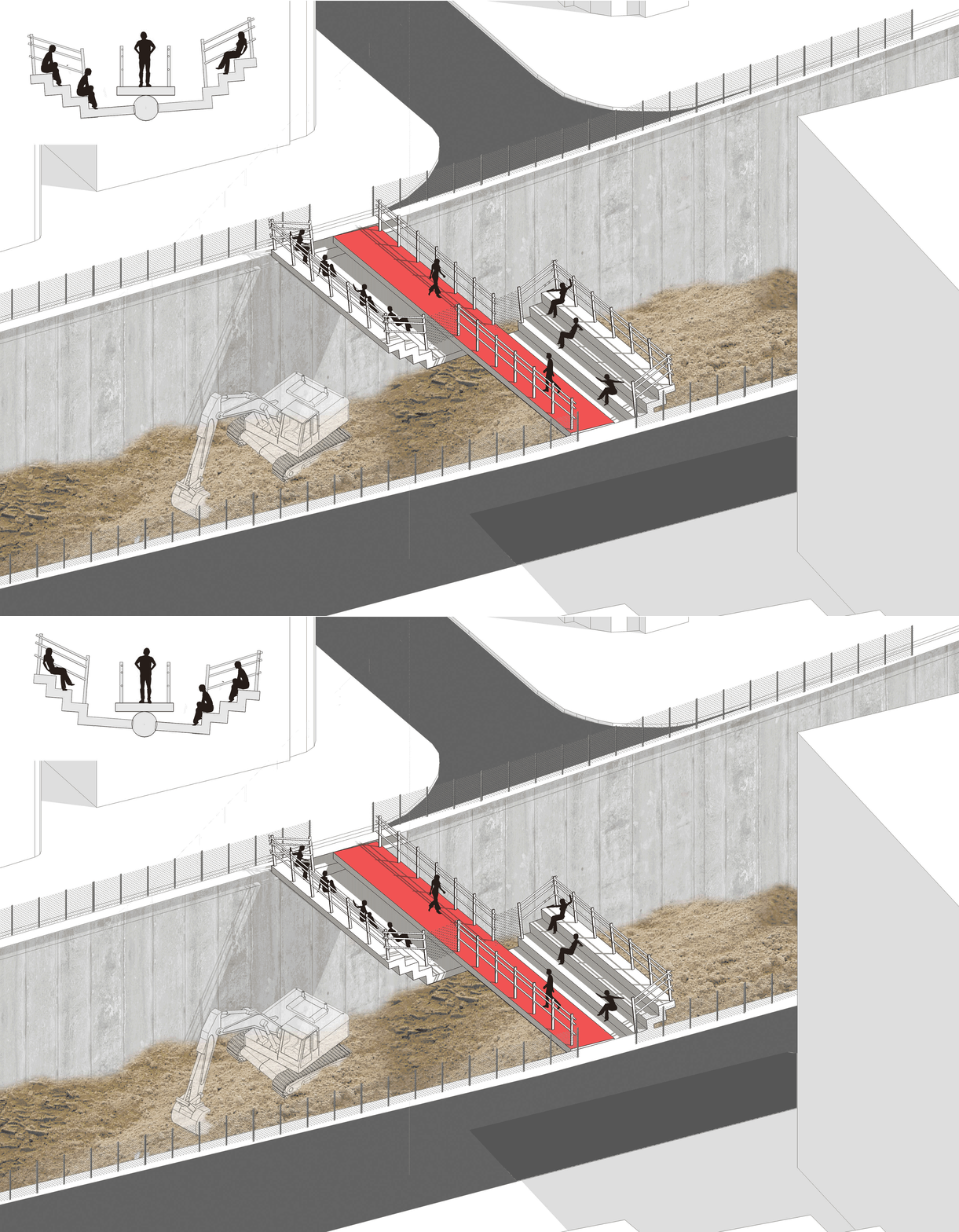
1. Instead of a narrow passageway, a playful “cat-walk” bridge that requires an equal number of participative spectators on both sides for balance.

2. Once connecting streets are now “Dead Ends”, which attract neglect. The proposal is an infrastructure for street events with a special view.

3. Traffic elements lose their function and become “Leftovers”. This traffic island is finally living up to its name, filled with excavated soil.

4. A more site-specific intervention uses a nearby elevated public parking as an infrastructure for an elevated esplanade designed like a roller coaster.

5. As a result of the construction site wall located right on the edge of the sidewalk, this section was created. With a narrow, dark alley on one side and a deep ditch on the other.
Inhabitants and shop owners were the ones to suffer from it the most.
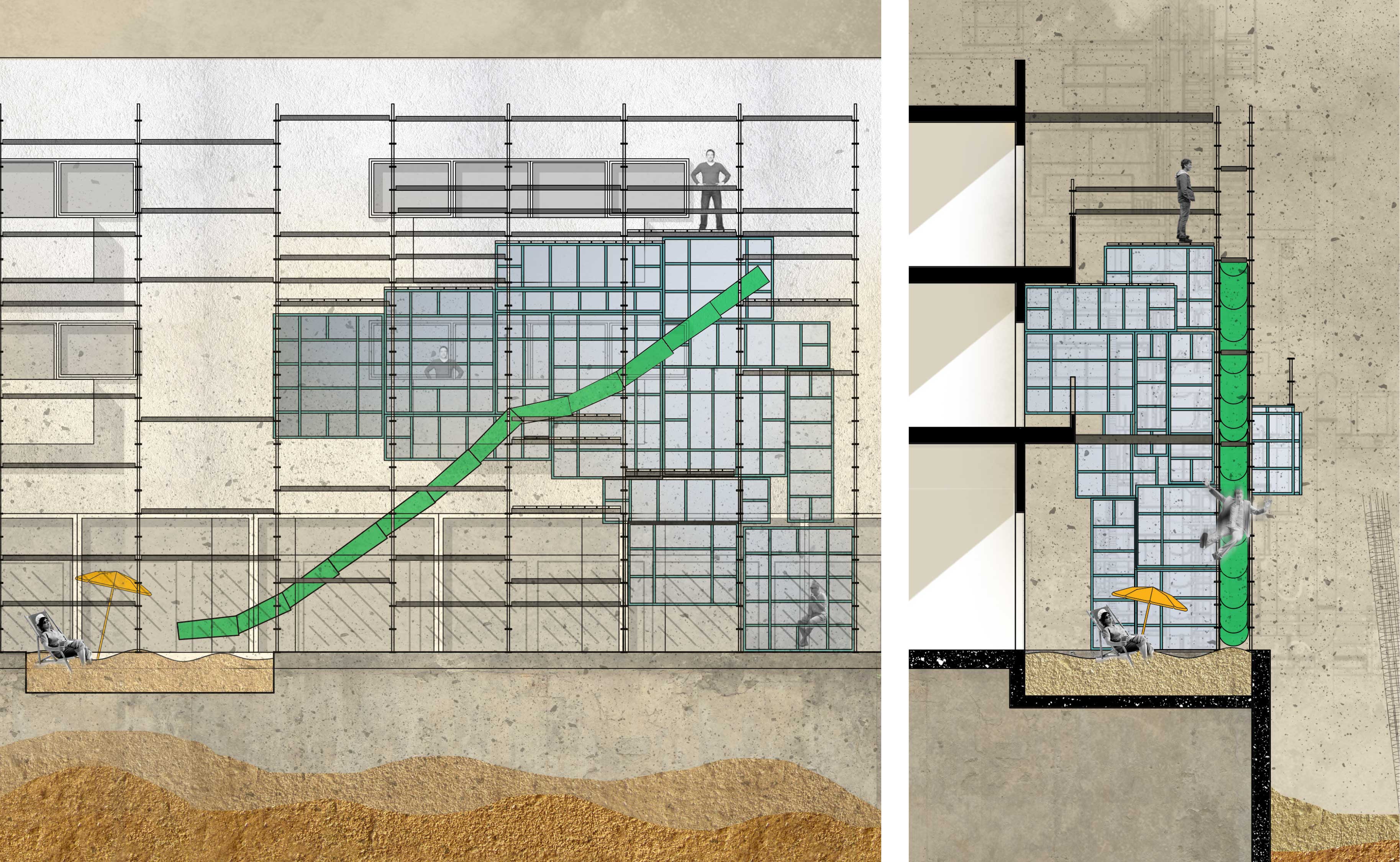
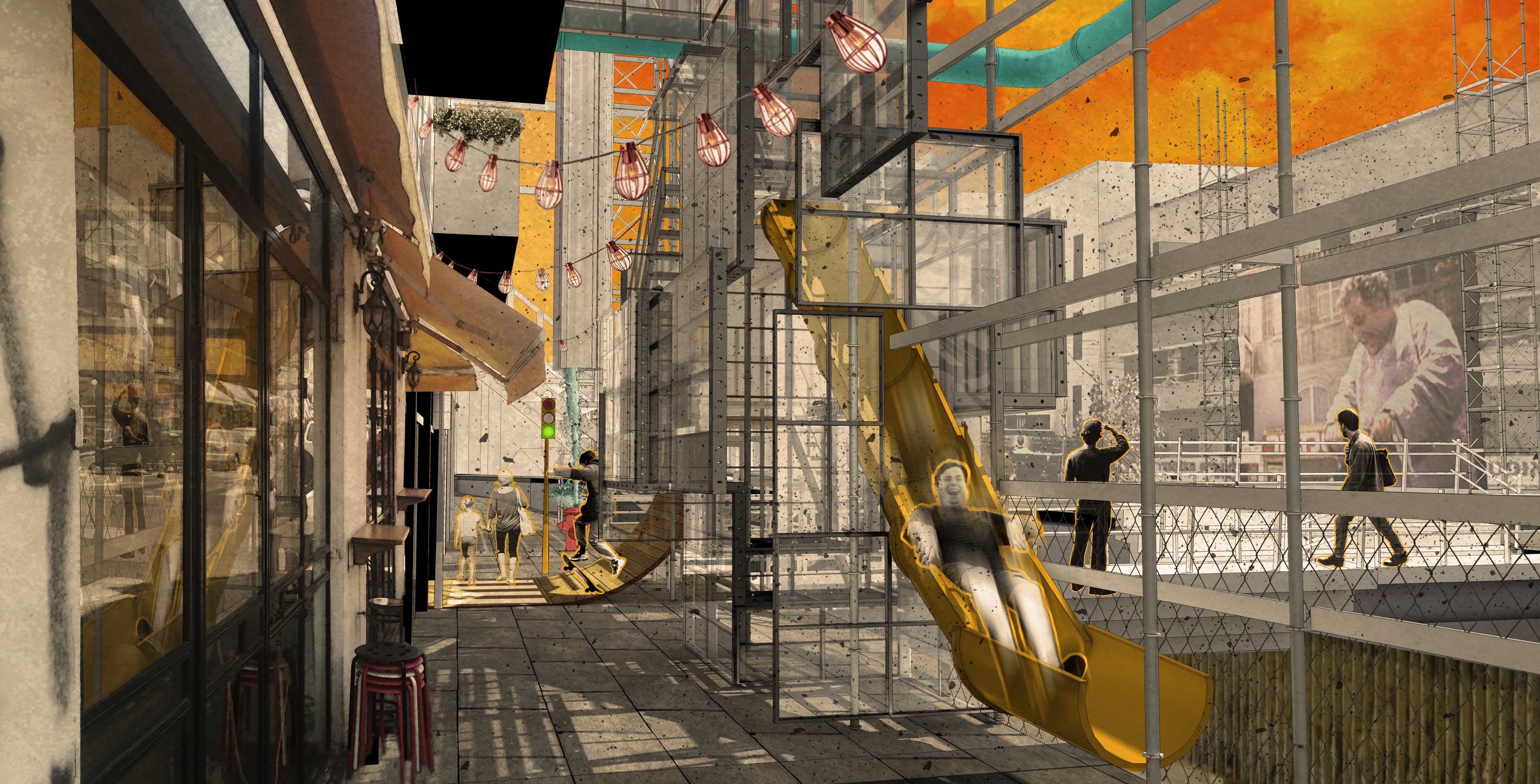
As part of the perspective looking for potential in the disrupted space, the project proposes a bank (much bigger than the one presented here) of interventions and attractions that can be implemented in the alley. These interventions turn the alley into a temporary festival, using the resources available from the construction site, giving the local residents programs that are usually impossible.
A special scaffolding system was designed as the structure for these interventions.
As part of the perspective looking for potential in the disrupted space, the project proposes a bank (much bigger than the one presented here) of interventions and attractions that can be implemented in the alley. These interventions turn the alley into a temporary festival, using the resources available from the construction site, giving the local residents programs that are usually impossible.
A special scaffolding system was designed as the structure for these interventions.
The “Alley” part of the project was developed as a public engagement board game. The game enables the inhabitants and shop-owners of the building to choose and distribute different add-ons to the building for the construction period.
Every intervention has a card with different categories, such as the floor it can fit to, physical difficulty, time of the day it is operated, etc., and a piece that represents it. In turn, the different players can either deny, cooperate, or reinterpret each other’s choices until they complete the building.
Every intervention has a card with different categories, such as the floor it can fit to, physical difficulty, time of the day it is operated, etc., and a piece that represents it. In turn, the different players can either deny, cooperate, or reinterpret each other’s choices until they complete the building.

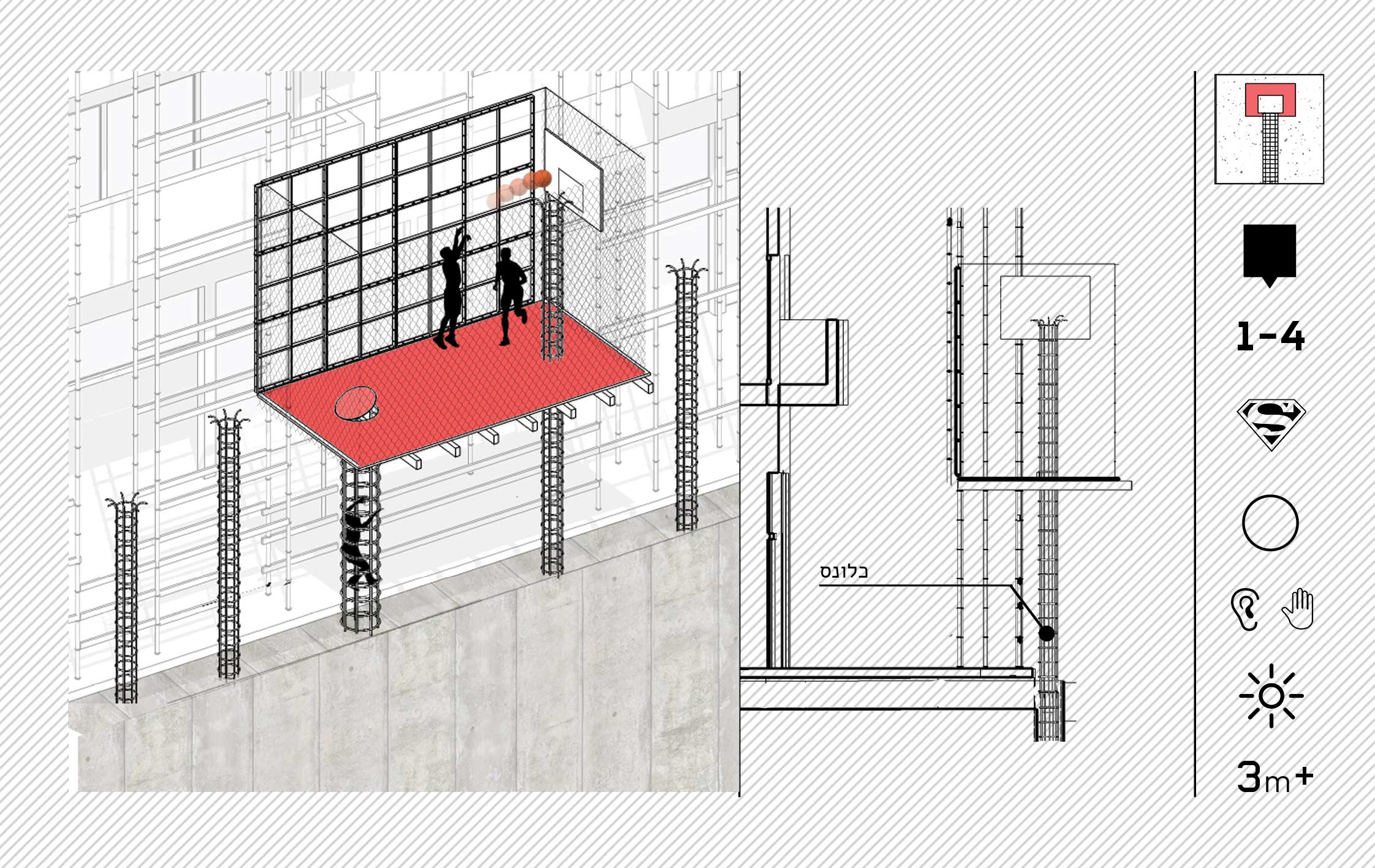
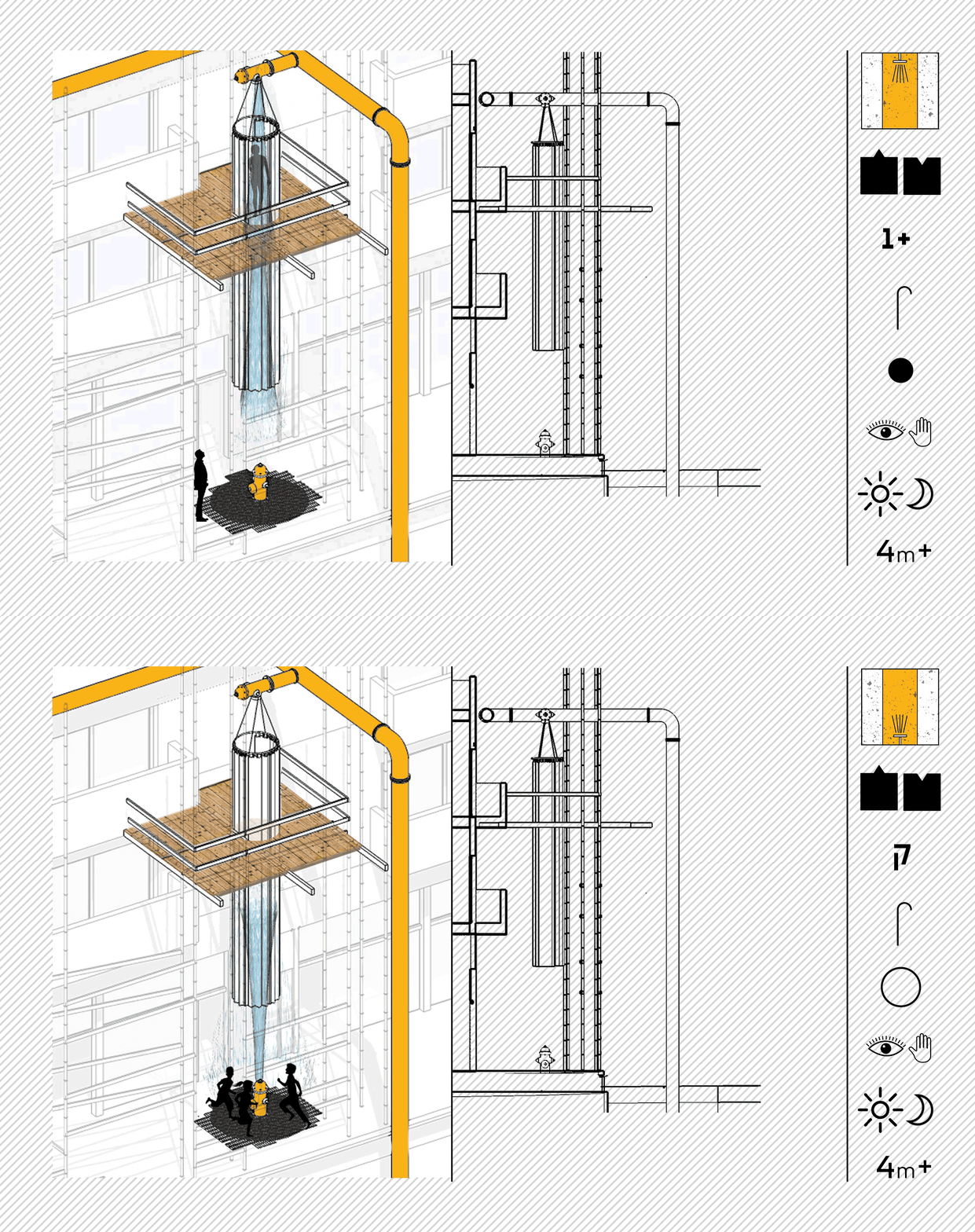


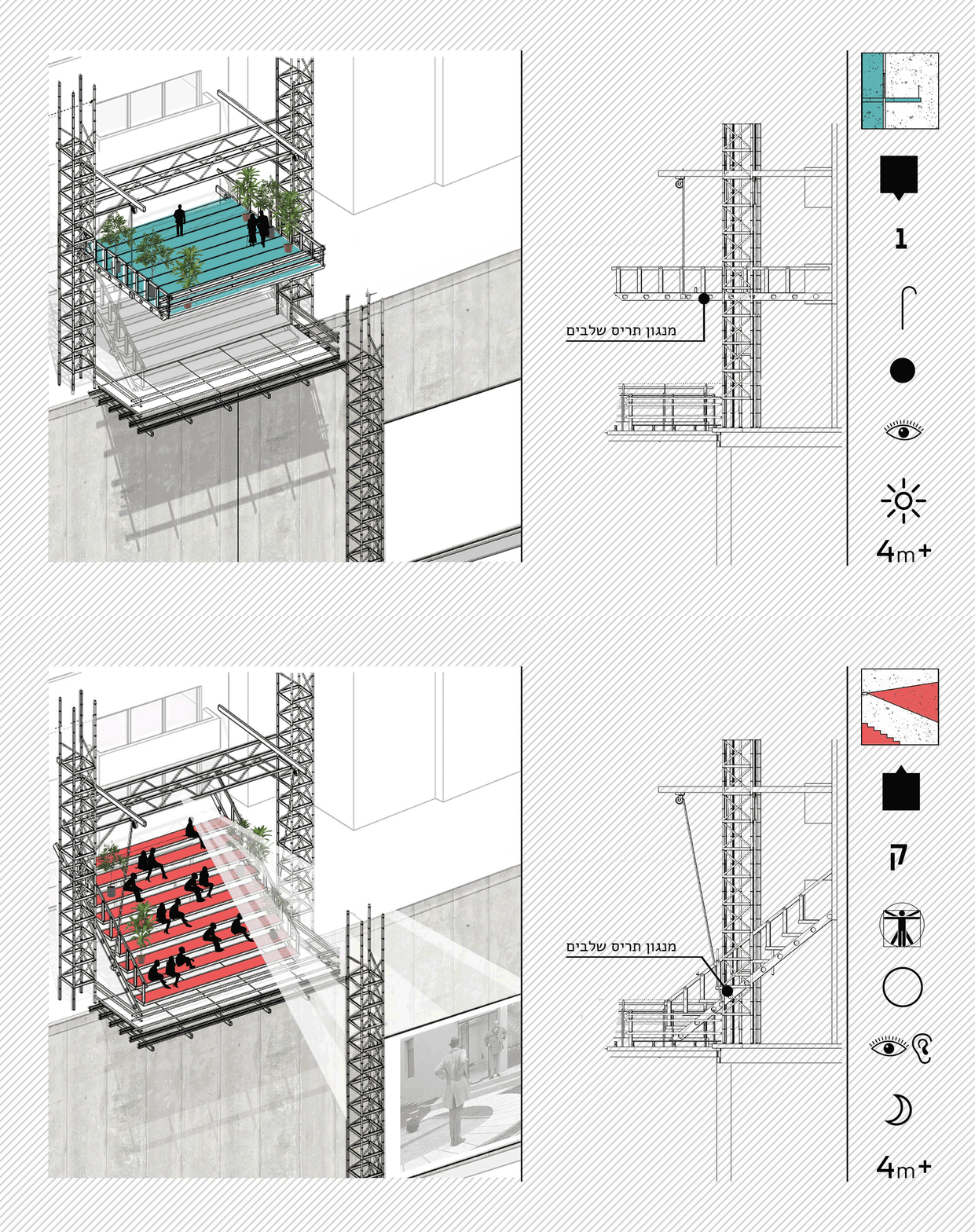
Different games result in different combinations. The following are 3 different game results:



Conceptual model - 1:20

When applied to a full block, the result is a construction site gone out of control. The surroundings now speak its language and feed off its resources and temporary freedom.
